Money cannot adequately address the historical harms of slavery and colonialism, and offering financial compensation is, according to Kwesi Pratt Jnr., itself an insult. The Ghanaian journalist and Pan-Africanist—widely known as “Comrade Kwesi Pratt”—made that point during a public lecture at the University of Cape Coast’s Faculty of Law this month. The event, convened by Dr. Ernest Ako, was intended for students of International Law and International Human Rights Law but drew a broader audience. Pratt, who is the managing editor of The Insight and a longtime figure in Ghanaian political activism, used the occasion and his recent book, Reparations: History, Struggle, Politics and Law, to press two arguments. He argued that reparations should aim at a structural reset of global power rather than a payout, and that the familiar narrative blaming African rulers for the slave trade distorts the historical record.
The visit came weeks after the UN General Assembly declared the transatlantic slave trade the gravest crime against humanity. In an interview, Pratt discussed how that resolution might be turned from symbol into legal leverage. He noted that the Papal Bull issued by the Pope to the King of Portugal in 1452 provided the legal and religious basis for the trade. He also pointed out that before the abolition of the Slave Trade in the West, there were no laws against it. The Nuremberg trials and the payment of compensation to victims of genocide in Namibia and elsewhere should provide some legal framework or basis for reparations. From his point of view, reparation ought to be about the building of a new and just world whose resources ought to be distributed equitably for the satisfaction of the needs and wants of all people regardless of their geographical location, color, language, or some other forms of identification.
Related: Court weighs limits on marriage laws
The UN General Assembly resolution of March 25, 2026, is a significant first step. It provides a diplomatic and moral frame to craft an agenda to reset the world. From this point on, activists on the continent and in the diaspora can use this frame to mobilize mass support for the movement for reparative justice. The General Assembly resolution by itself cannot bring about justice for the victims of the transatlantic slave trade. It cannot reset the world, and it will not automatically lead to the restructuring of the United Nations and its agencies like the World Bank, the International Monetary Fund (IMF) and the World Trade Organization. Those who seek justice must put maximum pressure on the levers of power around the globe to give effect to the resolution.
Lawyers’ Unions and Associations in Africa and the Caribbean may also be persuaded to start research on how to pursue the legal options. In this connection, it will be imperative to look at decisions of the Nuremberg trials and cases which have already been decided like the genocide of the Herero and Nama people in Namibia. The “Doctrine of Discovery” and the Euro-Christian framework that proclaimed non-Christian lands as terra nullius and the Papal Bull issued by the Pope need to be critically re-examined, especially as they were institutionalized in European colonial law and shaped property and sovereignty laws in the United States of America (USA). The faculties of law in our universities also should apply themselves to setting the legal framework for this struggle. Activists and legal scholars are essentially trying to construct a legal architecture that can withstand the weight of centuries of historical denial.
Related: CILEX pushes for Legal Services Act review
Precedents are important. They help to define, expand or shrink scope but what we are dealing with is the search for justice. In this search, the most important considerations are that an injustice was meted out to a whole race, our resources were stolen, our labor was stolen, our dignity was affronted and our very essence was devalued. We don’t need precedents to struggle for justice which is the inalienable right of all persons. There is no denying that a few Africans acted as agents of the enslavers. They served the enslavers in many ways including carrying their luggage across the forest or even as soldiers or gunmen in the invading force. Those Africans were themselves victims of the slave traders. For Pratt, it is interesting that the proceeds of the criminal trade cannot be found in Africa today. They are in the financial, religious, academic and cultural institutions of the West.
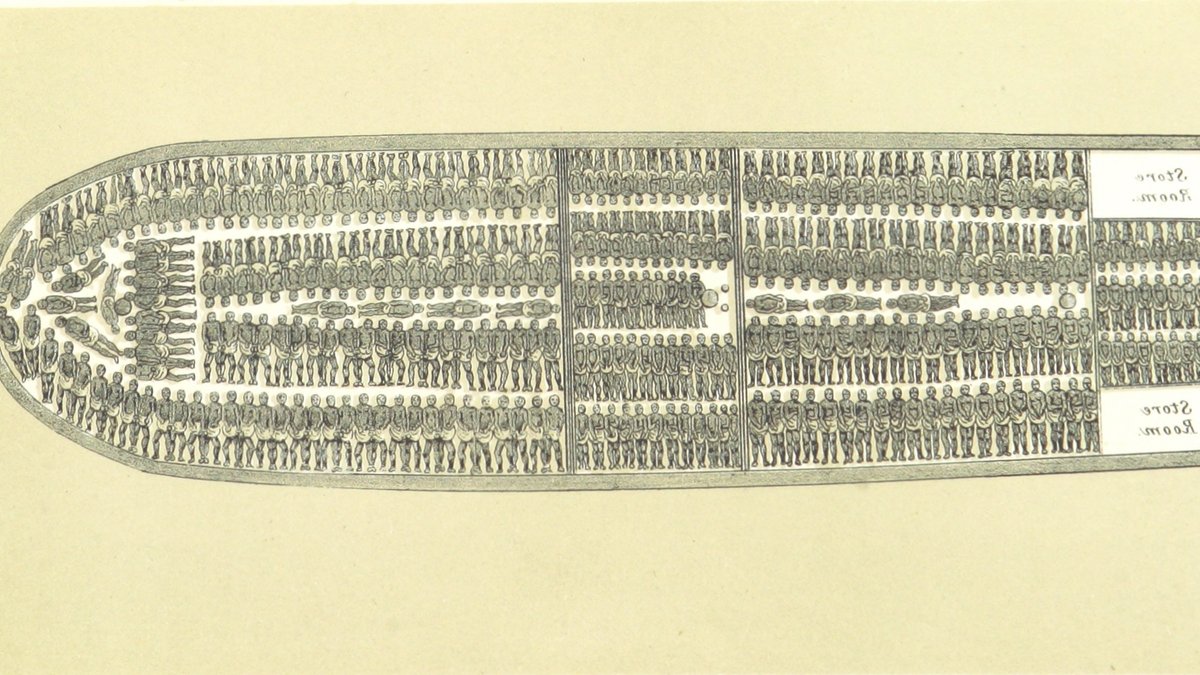
The statistics of the slave trade are also revealing. Some calculations put the number of Africans captured into slavery at 12.6 million people and for every one of them three people died in the wars of resistance. Even more interesting is the fact that amongst the stolen artifacts found in European museums are the skeletal remains of African heroes and sheroes who resisted the slave trade. Political will is essential in the fight for reparations. Pratt notes that all 55 African countries plus all the member states of CARICOM backed this historic resolution in the General Assembly of the United Nations. The masses of Africa are organizing themselves for an arduous struggle and no force can stop them from achieving justice.
Related: Barrister loses appeal over bomb hoax conviction
For the people most affected by these historical events, the demand for reparations is not merely a request for financial redress but a call for the restoration of agency. When the focus shifts from financial compensation to the return of stolen cultural heritage and the rewriting of curricula to include unvarnished histories, the conversation moves from restitution to recognition. This shift is often more contentious than the demand for money, as it forces a confrontation with the institutions that have benefited from the legacy of colonialism. The practical outcome of such a struggle would likely be a reordering of how global history is taught and how cultural property is valued, moving away from a Eurocentric view of heritage toward one that acknowledges the full scope of human history.
No amount of money can pay for the crimes which were committed against the African people through the slave trade, classical colonialism and neo-colonialism. It is indeed an insult to offer monetary compensation. What is needed is to reset the world to restore the dignity of African spirituality and cultural values. It is necessary to rebuild institutions, to redevelop educational curriculum to reflect needs and aspirations. It is necessary to tell history from own perspective. This may involve the cancellation of odious debts, the return of stolen artifacts, and payments for stolen labor. There can be no alternative to mobilization and struggle in the bold confrontation with injustice. All the answers point to urgent priorities. The demand is for justice and equality.


