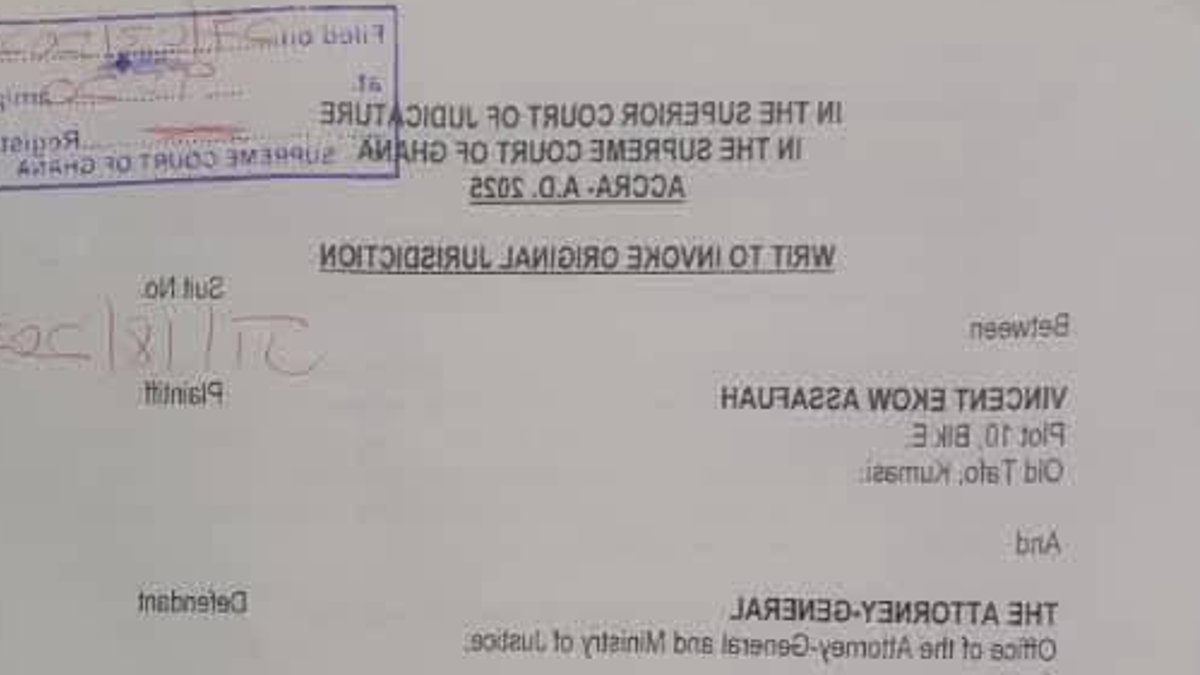
Ghana’s Supreme Court on Tuesday, May 6, upheld the suspension of Chief Justice Gertrude Torkornoo, rejecting a request by Member of Parliament Vincent Ekow Assafuah to halt the action. The court dismissed Assafuah’s application by a 3-2 majority vote, allowing the process to continue.
The proceedings focused on the constitutionality of the suspension. The lawyer for the applicant argued that the Acting Chief Justice, Kwasi Anin-Yeboah, should not preside over the case. He asserted that in Ghana’s constitutional history, a Chief Justice has never sat on a matter involving the Chief Justice.
The legal team contended that as the Acting Justice, Anin-Yeboah stands to benefit from the outcome of the application. They argued this creates a conflict of interest that violates the rules of natural justice. The court, however, ruled unanimously that the objection should be dismissed.
Gertrude Torkornoo had challenged the process before it began. In a communication to the President and the Council of State, she argued that no consideration affecting a defendant’s rights should be made without notice and an opportunity to respond. She requested seven days to review the petitions against her.
The president granted her ten days instead. Following that, he established a five-member committee on April 29 to investigate the merits of the petitions. The Chief Justice was then suspended from office pending the committee’s findings.
Related: Autonomous Weapons Outrunning Law That Governs Them
Constitutional framework for removal
The legal challenge centered on the interpretation of Article 146 of the 1992 Constitution. This article outlines the procedures for removing justices of the Superior Court. For other judges, the constitution requires a determination of a prima facie case before a committee is set up.
However, the text of Article 146(6) is silent regarding this specific step for the Chief Justice. This apparent omission has sparked debate about the separation of powers in Ghana. The Chief Justice argued that her rights as a defendant under Article 146(1) require prior notification and a chance to be heard.
Former Attorney General Godfred Yeboah Dame represented Assafuah. He argued that the process violates constitutionalism by bypassing the natural justice of allowing the accused party to respond. The Supreme Court’s ruling suggests that the president’s method of forwarding the petitions to the Council of State and appointing the committee was procedurally sound.
While the legal battle over the suspension continues, public reactions have been strong. Demonstrations labeled #SaveTheJudiciary have taken place. The court is expected to release its full reasoning on May 21. The committee investigating the petitions is also expected to deliver its findings soon.


