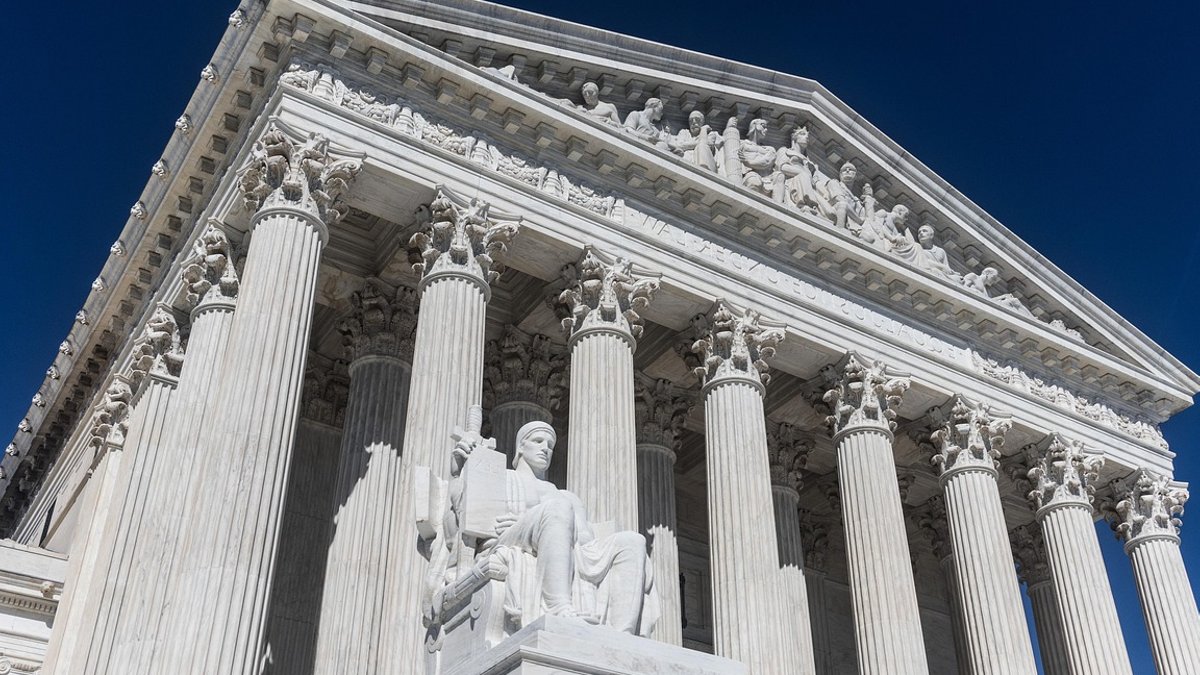
The Supreme Court will consider when the presumption of admission for returning green-card holders gives way and whether immigration officials may place a lawful permanent resident on the inadmissibility track without having clear and convincing evidence at the time of reentry. The justices granted certiorari in the case, now listed under the name Todd Blanche, Acting Attorney General, and will hear arguments on April 22, 2026.
This case concerns the distinction between a returning resident and someone “seeking admission” under the Immigration and Nationality Act. While admitted noncitizens face deportation under specific statutes, those treated as seeking admission may be charged as inadmissible under different provisions, a distinction that determines the outcome for many individuals. Muk Choi Lau became a lawful permanent resident in 2007. In 2012, he was charged in New Jersey with trademark counterfeiting. While the case was pending, he traveled abroad and returned through JFK Airport. Immigration officials paroled him for deferred inspection rather than admitting him as a returning resident. After he pleaded guilty, the Department of Homeland Security sought to remove him under inadmissibility provisions, alleging a crime involving moral turpitude. The Second Circuit found that at the time of Lau’s reentry, the government only had criminal accusations, not clear and convincing evidence of a disqualifying offense. The court vacated the removal order, allowing for a future deportation case under the standard statute.
Related: Resolution 2803 Reveals Hidden UN Veto Power
Ultimately, the case asks whether DHS can parole a returning green-card holder and later justify that decision, or whether the statute requires sufficient evidence at the border before denying ordinary admission.
Arguments over discretion and proof
The government argues that Lau was properly removable because he had committed the offense before returning to the United States, and that parole does not constitute admission. Under this view, once paroled, Lau remained an arriving alien awaiting inspection, and later removal proceedings could use the conviction record to establish both the offense and inadmissibility. The government maintains that the INA does not require DHS to have clear and convincing evidence at the time of reentry; instead, proof can be presented later before the immigration judge.
Lau’s main argument is that the statute establishes a specific sequence, which the government did not follow. Under the law, a lawful permanent resident returning from abroad “shall not be regarded as seeking an admission” unless an exception applies. Lau contends these provisions require DHS to determine at the border whether an exception applies before invoking parole. He argues the government cannot parole a returning green-card holder simply to gain time to assess its authority.
Related: Sir Geoffrey Birss named new master of the rolls
Lau further argues that the government lacked the required level of proof under its own framework. He cites precedent that demands clear and convincing evidence before DHS can treat a returning lawful permanent resident as seeking admission. When Lau returned through JFK, he had not been convicted or admitted the offense; the government only had an unresolved criminal charge. Lau contends this is insufficient under both statutory text and due process, as accusations are not proof. He maintains he was admitted upon inspection, and any removal effort should proceed, if at all, through deportation rather than inadmissibility.
The justices will likely examine whether the statutory text requires a decision at reentry, as Lau argues, or if the government can establish that status later in immigration court with new evidence. They may also address the meaning of parole, whether an unlawful parole is still considered valid under the INA, and what border officers must know at the airport.
Related: Barrister loses appeal over bomb hoax conviction
For lawful permanent residents, this case could significantly affect what happens after international travel if there is a pending criminal case or unresolved allegation. If the government prevails, DHS will have greater flexibility to parole returning green-card holders and to use later-developed evidence in immigration court to pursue inadmissibility. This could make it easier for the agency to seek removal in cases where the individual had not yet been convicted upon return. If Lau prevails, DHS would face stricter evidentiary requirements at the border. Returning permanent residents would have greater protection against being treated as applicants for admission solely because of unresolved charges or suspicion. The government could still seek removal, but would more often need to proceed through deportation rather than inadmissibility, which involves different rules and burdens.
More broadly, this case highlights that immigration law often depends less on whether misconduct occurred and more on when the government must prove it, under which statute, and with what procedural consequences. This is not just a technical dispute about parole, but a case about the protections Congress provided to green-card holders at the border and the extent of DHS’s flexibility in treating returning residents as applicants for admission.

