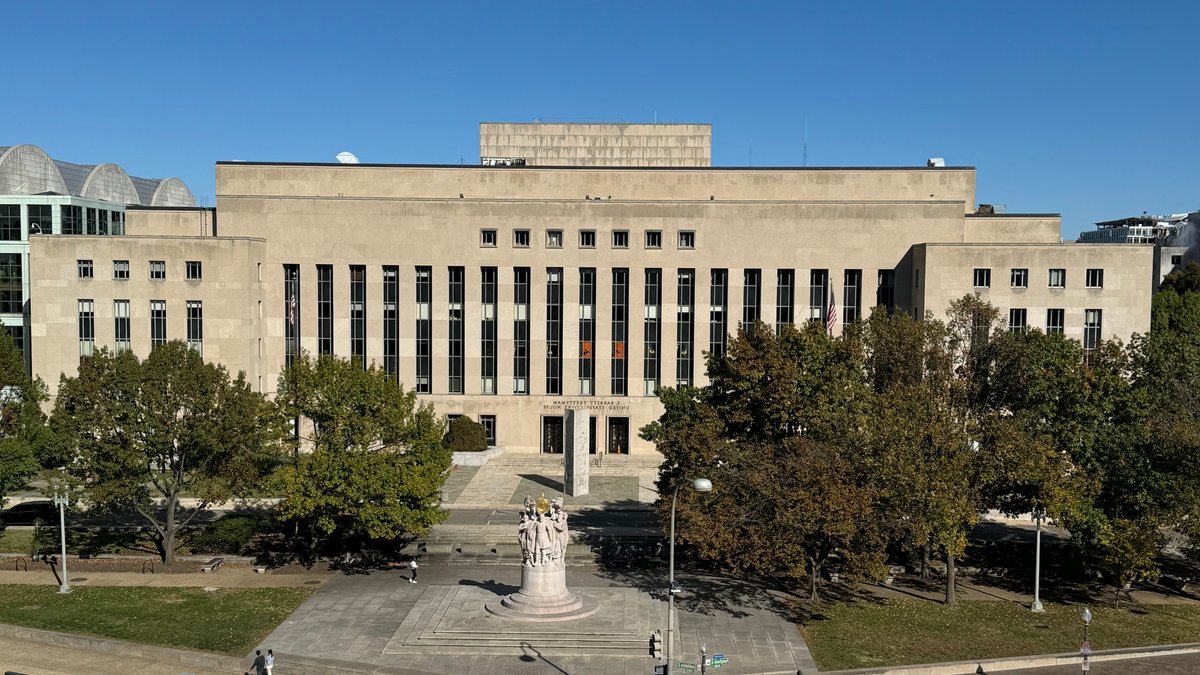
The Alien Terrorist Removal Court (ATRC) has been invoked for the first time since its creation in 1996, with the Justice Department seeking to remove a noncitizen accused of terrorism. The court’s first public order suggests the proceeding will be closely scrutinized, with Chief Judge Joan Ericksen questioning the government’s application and ordering additional factual or legal analysis.
The ATRC is a specialized tribunal that may consider classified evidence not seen by the respondent, and its use raises concerns about the balance between national security and individual rights. The court’s authority is limited, and it may not grant asylum, statutory withholding of removal, or other forms of protection.
The ATRC was created as part of the Antiterrorism and Effective Death Penalty Act of 1996, and it consists of five federal district judges designated by the chief justice. The court had never received a removal application before this case, according to the Federal Judicial Center’s history of the court.
The government may use this special process when the attorney general possesses classified information indicating that a noncitizen is an “alien terrorist” and maintains that proceeding through the ordinary immigration system would create a national-security risk. The initial application is submitted ex parte, under seal and in camera, as provided by law.
Related: Kwesi Pratt Jnr on Legal Reparations
The ATRC statute does not provide clear guidance on how torture claims should be adjudicated within this specialized system.
The Justice Department attempted to fill this gap in 1999, with a regulation stating that a removal order issued by the ATRC may not be executed when doing so would violate Article 3 of the Convention Against Torture. However, the regulation assigns the determination of torture claims to the attorney general, in consultation with the secretary of state, which raises concerns about the lack of judicial oversight.
In ordinary immigration proceedings, a person barred from asylum or withholding may receive deferral of removal under the Convention Against Torture, which prohibits removal to a particular country where the person is likely to be tortured. However, the ATRC statute does not provide a clear mechanism for adjudicating torture claims, and the regulation’s assignment of this determination to the attorney general creates a conflict of interest.
The division of authority between the ATRC and the attorney general creates an unresolved jurisdictional problem. The removal-court judge’s decision may be appealed to the US Court of Appeals for the District of Columbia Circuit, but the torture determination is not made by the removal-court judge and may occur separately from the judge’s decision.
Related: Court weighs limits on marriage laws
The ATRC regulation does not provide a clear procedure for obtaining judicial review before removal occurs, which raises concerns about the respondent’s due-process rights.
The government has a serious response to the procedural issues raised by the ATRC, citing the need for executive expertise in decisions involving foreign governments, diplomatic assurances, classified intelligence, and potential terrorist activity. However, executive expertise does not resolve the procedural issue, and the issue is not whether the attorney general and the State Department should participate, but whether the official pursuing removal should possess the final word on whether that same removal plan will violate the United States’ obligation not to deliver a person to torture.
National-security proceedings routinely employ procedures that protect classified information while preserving meaningful scrutiny, and the ATRC statute itself requires judicial findings, permits sealed records, and creates a special-attorney mechanism for some respondents. Confidentiality and adjudication are not mutually exclusive, and the court should require the Justice Department to address the procedural issues before the proceeding advances much further.
The court should also consider the need for a lawful process, including notice of the intended destination, a meaningful opportunity to present evidence, a reasoned decision under the proper legal standard, and a practical opportunity to obtain judicial review.
Related: Corey Ruiz’s lawyer wants officer charged in shooting
Congress should ultimately eliminate the ambiguity by assigning Convention Against Torture claims to the same Article III judge who determines removability, requiring a defined evidentiary record, and authorizing appellate review before removal.
The ATRC was designed to reconcile national security with judicial oversight, and its first case should not create a precedent under which the executive branch asks a court to authorize removal and then decides for itself whether executing that removal will deliver someone to a torturer.
They may eventually establish that the respondent is properly classified as an alien terrorist, but none of that eliminates the need for a lawful process.


