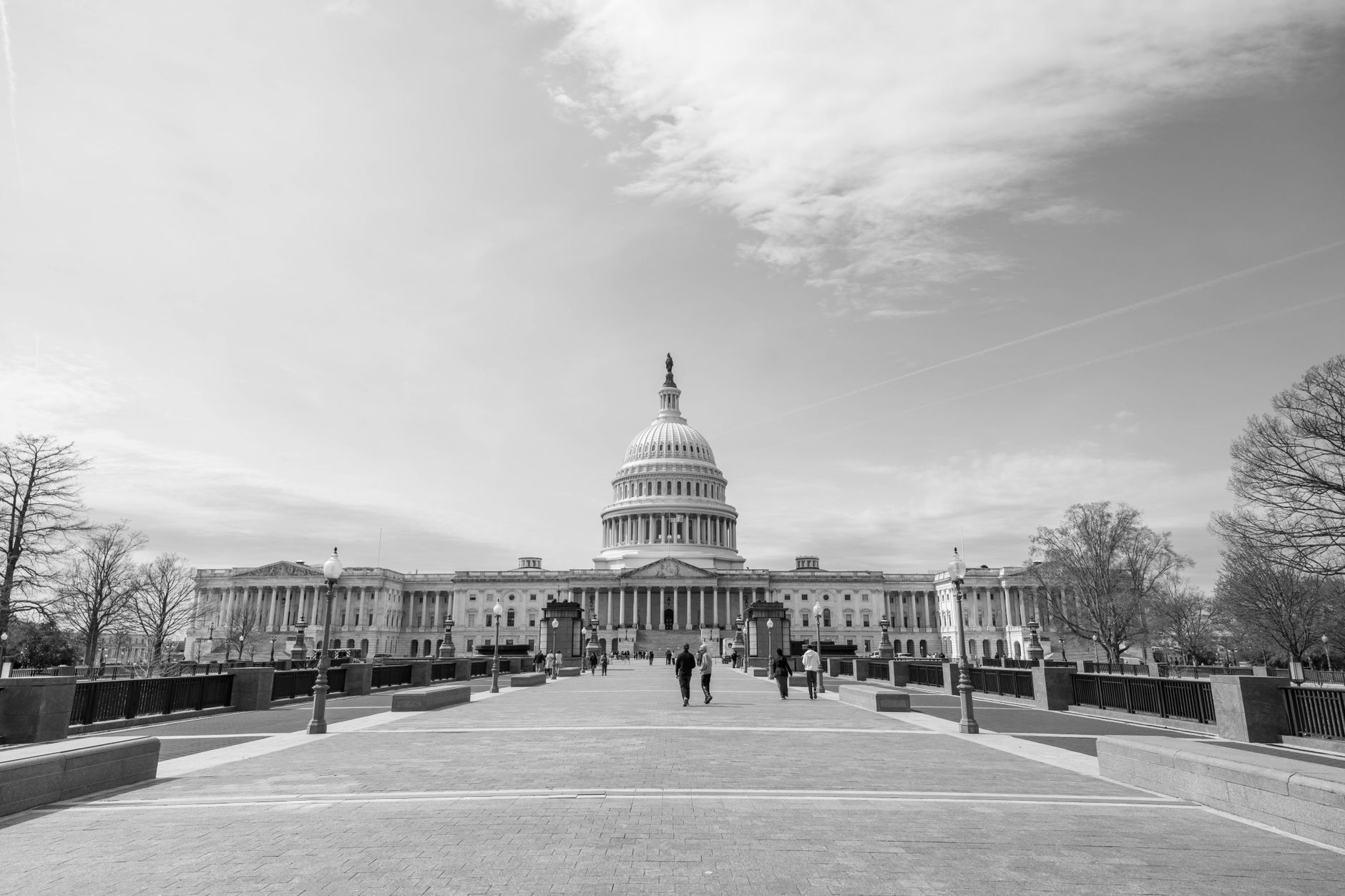
Congress is facing a time crunch to pass legislation, with the 119th Congress having limited days left to introduce and vote on bills. The U.S. Senate and U.S. House of Representatives have returned to Washington, D.C., after a brief recess, but their time is limited due to upcoming elections and scheduled breaks.
There are only 24 days left until the August Recess, 35 days until current government funding expires, and 36 days until the midterm elections. After the elections, there will be a lame-duck legislative session lasting approximately four weeks.
Read Also: The Future of Case Lawyer: Navigating Tomorrow’s Legal Landscape
Congress has a lot to do and little time to do it, with all bills expiring at the end of the current Congress on January 3, 2027. This has created a sense of urgency, with many employment-related bills still unlikely to be enacted due to the legislative filibuster in the Senate.
DOL Reinstates 2019 Overtime Regulations
The U.S. Department of Labor (DOL) has officially reinstated the 2019 overtime regulations, which were previously vacated by a court. The DOL published a final rule in the Federal Register on May 15, 2026, removing the 2024 Fair Labor Standards Act overtime regulations and replacing them with the 2019 regulations.
According to the notice, the final rule “merely conforms the text in the Code of Federal Regulations (CFR) to reflect the courts’ vacatur of the 2024 rule by removing the 2024 rule regulatory text and replacing it with the text from the 2019 rule.”
Faster Labor Contracts Act Picks Up Steam
The Faster Labor Contracts Act is gaining momentum, with 214 representatives signing a discharge petition to force a vote on the House floor. The petition needs 218 signatures to be successful, and four Republicans have already signed on. They are hopeful that it will pass despite the limited time left in the current Congress.
House Lawmakers Examine Workplace Safety Innovations
The House Subcommittee on Workforce Protections held a hearing on May 13, 2026, to discuss workplace safety innovations. The hearing focused on how employer-sponsored initiatives, such as the adoption of new technologies, can advance workplace safety even in the absence of prescriptive standards. Ogletree Deakins shareholder Melissa K. Peters testified at the hearing, warning against the Occupational Safety and Health Administration’s (OSHA) preference for prescriptive rulemaking.
Peters advocated for performance-based or goal-focused standards that allow employers to “calibrate their programs to the actual hazards they face and let recent technology satisfy the rule without waiting for OSHA to catch up.” She also recommended that OSHA take a performance-based approach to its pending heat injury and illness prevention standard.
House to Vote on Student-Athlete Reform Bill
The House is expected to vote on the Student Compensation and Opportunity through Rights and Endorsements (SCORE) Act next week. The bill would set new rules for the college athletics landscape, including protecting student-athletes’ ability to enter into “name, image, and likeness” (NIL) licensing agreements. It would also change coaches’ hiring timelines and set a five-year eligibility cap for student-athletes.
Discharge Petition Process
The House rule allowing members to discharge bills stuck in committees is a relatively new congressional phenomenon, first adopted in 1910. The process has changed over the years, with the number of required signatories lowered from 145 to 218 in the 1930s. They made the entire process transparent with a 1993 rule change championed by then-representative James Inhofe.
Measuring the success of discharge petitions has proved difficult, with less than 4 percent of the 635 discharge petitions filed between 1935 and 2023 garnering the necessary 218 signatories. It has been a successful effort only four times, resulting in enacted legislation during that time frame, including the Fair Labor Standards Act of 1938.