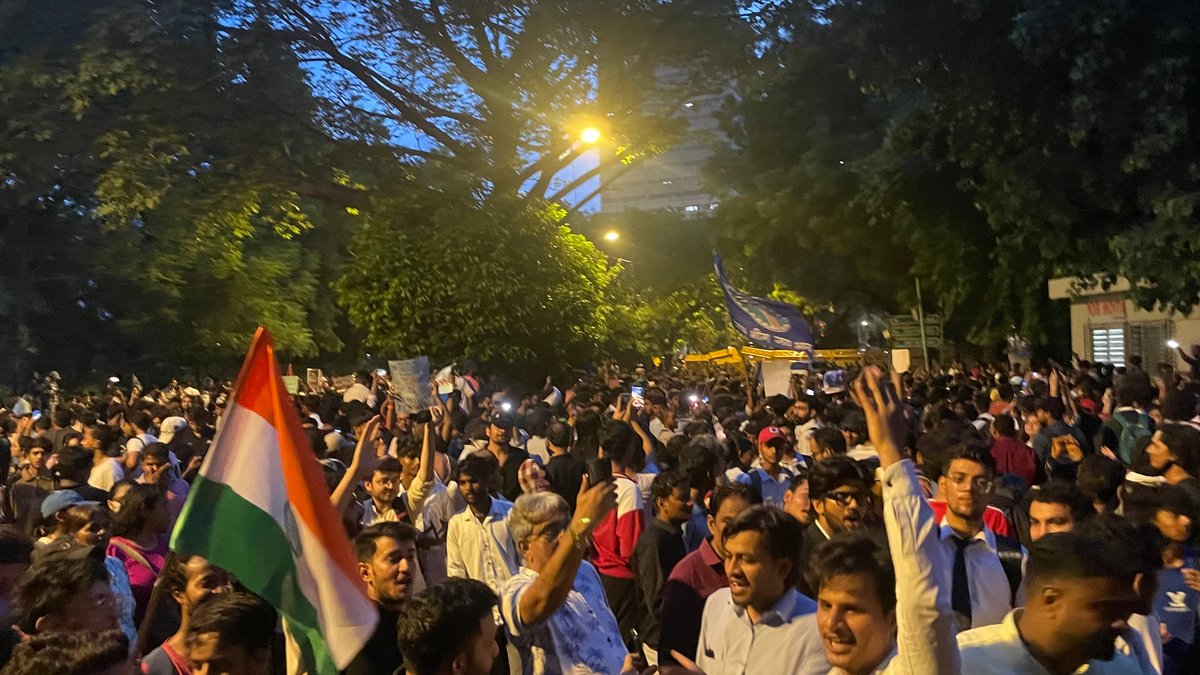
India’s Supreme Court spent the last two weeks of July and the first week of August refining its response to student protests. The process highlighted deeper problems in how police handle dissent nationwide.
Clarification reveals earlier order was misused
On August 3, a three-judge bench led by Chief Justice of India Surya Kant clarified an order issued just one week earlier. The original July 28 directive had instructed states not to take coercive action against student protesters unless they had criminal records. Police, however, misapplied the order to justify arrests for minor offenses.
The bench specified that protections applied only to those facing serious criminal charges.
Protests over exam leaks met with force
The case began with a July 20 march toward Parliament organized by the Cockroach Janta Party, a student-led group demanding the resignation of Union Education Minister Dharmendra Pradhan. The protest followed repeated leaks of national exam papers, including the NEET-UG 2026 test, which had sparked outrage.
Related: Lawyer for Barghouti on Palestinian Leader’s Ordeal
When demonstrators at Delhi’s Jantar Mantar pushed through police barricades, officers responded with tear gas, lathis, and, according to petitioners, pellet guns, rubber bullets, and electric batons. One student lost their eyesight in the clashes, and a journalist was injured. Police claimed protesters had assaulted officers during the confrontation.
Pradhan stepped down on July 25, and two Union ministers assured protest leaders that cases against students would be withdrawn. Some states, including Bihar and Assam, followed through.
Court pushes for national protocol amid ad-hoc solutions
During hearings, the bench emphasized the right to peaceful protest while condemning police excesses. “Agitation alone cannot justify police violence,” Chief Justice Kant said on July 27. He criticized the lack of a uniform national protocol, noting that states respond with wide discretion.
By July 28, the court issued directives: an independent probe into the Jantar Mantar incident, the release of detained minors, preservation of CCTV and drone footage, and a ban on publishing protesters’ personal data.
Related: Ghana Court Upholds Suspension of Chief Justice
This was not the first time India’s top court intervened in police violence during protests. Similar actions followed the 2012 crackdown on Baba Ramdev’s supporters at Delhi’s Ramlila Maidan and the 2020 Shaheen Bagh demonstrations. In Amit Sahni v. Commissioner of Police, the court ruled that public spaces cannot be occupied indefinitely, even for legitimate causes.
The pattern is clear. Courts act once a crisis emerges, but without a standing framework, each new protest becomes a fresh negotiation over the rules. Parliament will reconvene soon. Whether lawmakers will establish a lasting protocol—or leave the task to the next bench—will decide if this case becomes a precedent or is forgotten.
A formal warning for a demanding magistrate shows how oversight mechanisms often fall short in practice.


