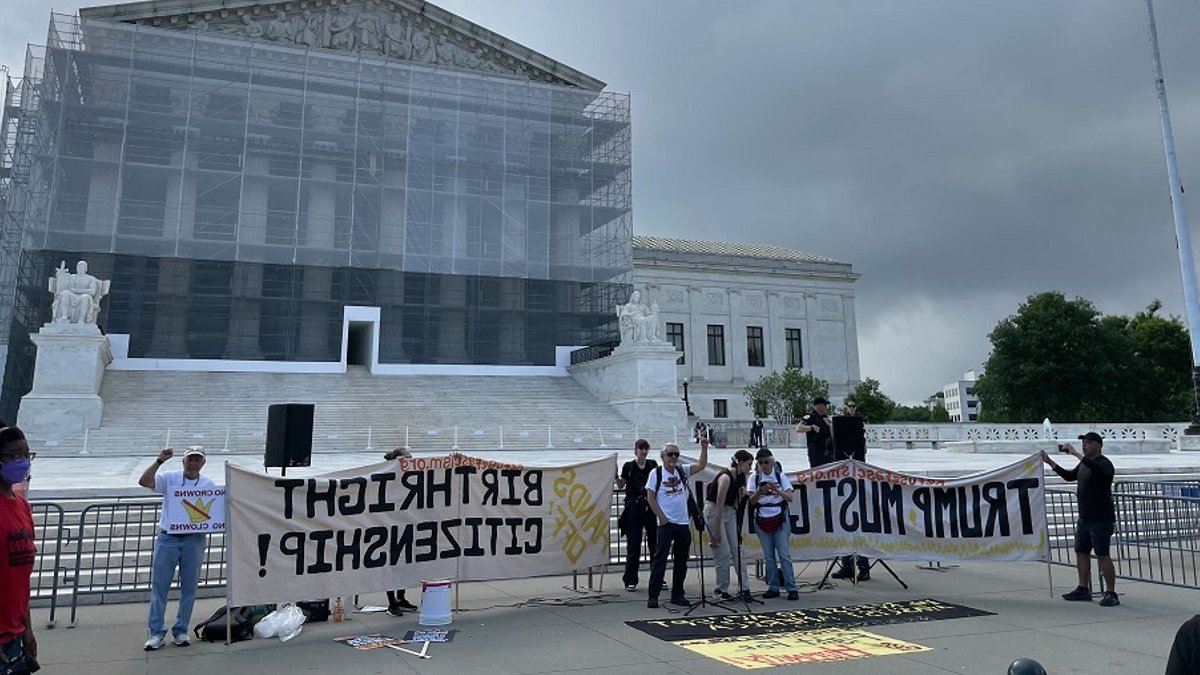
WASHINGTON — The Supreme Court devoted two and a half hours Thursday to a procedural dispute that could alter how federal policies are blocked in court. The session examined whether nationwide injunctions should continue as a means to halt executive actions, including President Trump’s attempt to end birthright citizenship for children born to undocumented parents.
The justices avoided direct debate on the constitutionality of the executive order, which several lower courts have already declared unlawful. Their discussion centered on whether those courts exceeded their authority by issuing injunctions that apply nationwide rather than only to the plaintiffs involved.
U.S. Solicitor General D. John Sauer argued for the Trump administration, presenting the issue as one of judicial restraint. He contended that nationwide injunctions go against the long-standing practice of limiting relief to parties in a lawsuit. Sauer referenced constitutional originalism, asserting the 14th Amendment’s citizenship clause was not meant to cover children of undocumented immigrants. This stance drew skepticism from the Court’s liberal justices.
Justice Sonia Sotomayor countered, pointing out the order conflicts with at least four Supreme Court rulings. Chief Justice John Roberts appeared more open to Sauer’s view that such injunctions prevent legal questions from developing through lower courts. He mentioned the recent TikTok case as an example of a swift resolution without one.
The conservative justices showed division. Justice Clarence Thomas questioned the historical foundation for nationwide injunctions.
Sauer agreed, arguing that the closest historical analogs involved discrete claims for discrete groups, but never broad, nationwide relief, and suggesting class action lawsuits are a more appropriate response.
Related: Ghana Court Upholds Suspension of Chief Justice
Justice Ketanji Brown Jackson questioned whether nonparties benefiting from injunctions differed from those who gain incidental relief from other lawsuits.
The justices also explored whether class-action lawsuits could serve as a practical alternative. Justice Samuel Alito asked Sauer what difference it would make, while Justice Amy Coney Barrett wondered if a successful class action would function similarly to a nationwide injunction. The government has not indicated whether it would permit class certification in this case.
One point emerged clearly: the Court is unlikely to deliver a broad ruling. Some justices suggested limiting the circumstances for nationwide injunctions rather than eliminating them entirely. Others expressed concern about leaving affected families without options if the order were allowed to take partial effect.
A decision favoring the Trump administration could restrict future challenges to federal policies. Plaintiffs might then need to rely on slower, more fragmented legal approaches. Upholding the injunctions, however, could signal that some executive actions are too sweeping to be addressed through piecemeal litigation.
The ruling is expected by early July. The justices offered no clear hints about their position. Whatever they decide, the outcome will influence how courts handle future disputes over presidential authority and who may challenge it.
This case follows a pattern of judicial scrutiny over arrest safeguards in other nations. Recent reports show similar tensions between executive power and individual rights in different legal systems.


