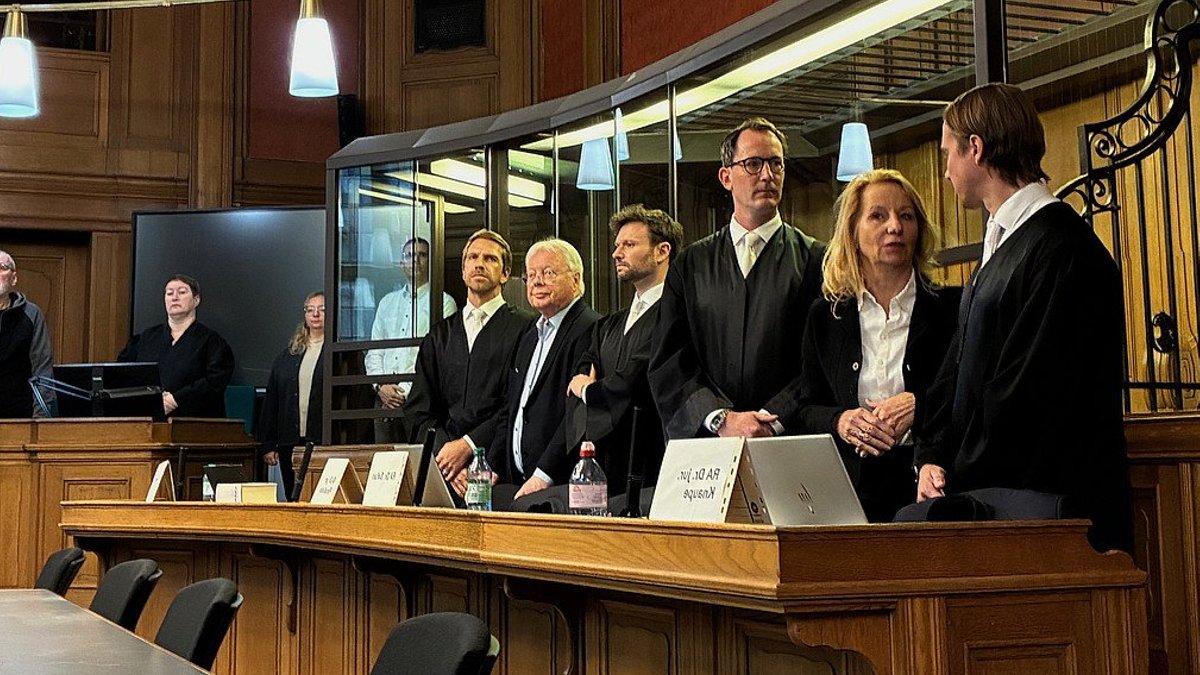
After months of pre-trial hearings, the criminal trial of Patricia Schlesinger has begun at the Berlin Regional Court. The former director of the RBB public broadcaster and three other senior executives now face charges of embezzlement. The central issue for the court is determining how much the supervisory board knew about the compensation plans. On the bench sit the former RBB director Patricia Schlesinger, two other former members of the executive management, and the former chairman of the supervisory board Wolf-Dieter Wolf.
Accusations of Embezzlement and a New Pay System
The public prosecutor’s office has detailed a complex case involving the misuse of funds. Schlesinger and the others are accused of approving a variable compensation system for executives without the necessary approval of the supervisory board. The prosecution alleges this arrangement allowed the four defendants to enrich themselves at the expense of the broadcaster. According to the indictment, Schlesinger received about €224,000 from the total variable compensation pool of roughly €933,505.
Among the specific accusations are large sums spent on private dinners and travel that were recorded as business expenses. The former director is also charged with improperly accepting a monthly allowance for her role as the rotating chair of the ARD broadcasting association. The potential penalty for these crimes is imprisonment for a term between six months and ten years. The prosecution also cites numerous accusations from 2022 regarding favoritism, massage chairs, and the reimbursement of private meals and business trips.
For the defendants, the focus of the trial is the defense of the compensation system. They argue that the introduction of variable pay was a standard practice in the industry. Schlesinger’s lawyer, Dr. Oliver Sahan, stated that the system was designed to improve efficiency and align employee performance with the success of the organization. He noted that the plan was developed by the consulting firm Kienbaum and had been discussed in the supervisory board.
The defense also points to a lack of evidence that the supervisory board was kept in the dark. The lawyers for Schlesinger and Wolf emphasize that the compensation system was not invented by them but rather is an “absolute standard” in executive pay, comparable to practices in bath operations, water works, and the Berlin waste management sector.
Read Also: Woman Gets Life Sentence for Boy’s Murder in Germany
The trial has already drawn a large crowd to the criminal court in Moabit. Former colleagues from the public broadcasting sector are present, though some have chosen to sit in the audience rather than the press section.
Reconstruction of Expenses and the Role of Witnesses
The proceedings will involve a detailed reconstruction of Schlesinger’s expense reports. Prosecutors will examine the precise nature of the private dinners and the trip to London. They aim to prove that these costs were not legitimate business activities. The court will review the specific entries to determine if they qualify as reimbursements for official duties. These private dinners and the trip to London are part of 26 cases of embezzlement attributed to Schlesinger, alongside a pension and leave agreement worth around €800,000.
Witnesses from the public broadcaster will play a significant role in the trial. Former colleagues and current employees are expected to testify about the internal culture and decision-making processes. Their testimony may provide context regarding the approval workflows for such expenses. The defense will cross-examine these witnesses to challenge the prosecution’s narrative of deliberate deception.
The former board chairman Wolf-Dieter Wolf faces 13 accusations, while the other two defendants face six and five respectively. The outcome of the trial will depend heavily on the interpretation of board meeting minutes and witness testimony. The defense highlights that the variable compensation system was discussed in the supervisory board and received approval, challenging the prosecution’s claim that the arrangements were made behind the board’s back. In conclusion, the trial of Patricia Schlesinger and the other executives will be a complex and closely watched proceeding, with significant implications for the public broadcasting sector in Germany.


