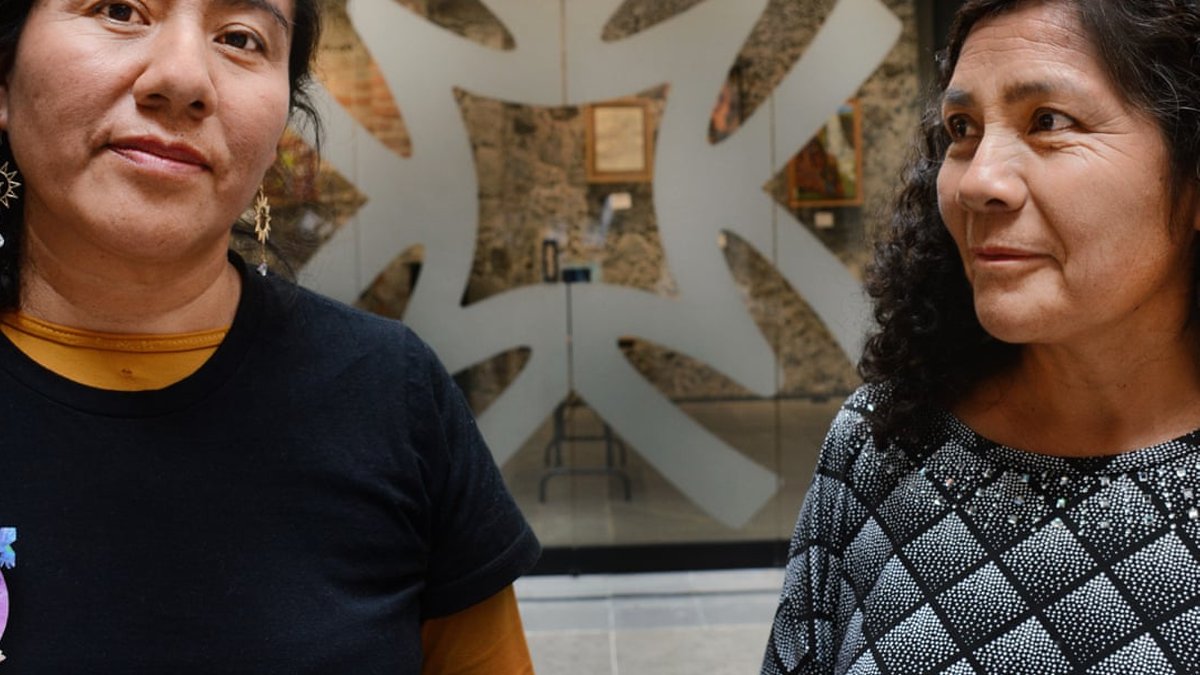
Paz Rodríguez woke up about 5am at her home in Milpa Alta, a suburb of Mexico City, on 20 March 2021, to a flood of texts from her sister, Oliviera Rodríguez, saying their mother’s dog was barking a lot and she wasn’t responding to calls. Rodríguez rushed to her mother’s house, where she found her lying face down on the floor, unresponsive, with a lot of blood around her body.
Her mother, Melesia García, 72, had been attacked the night before, and the police said that assailants broke in, raped and killed her. García was one of the 1,022 victims of femicide in 2021, when intentional murders of women and girls hit a historic high in Mexico.
When a prosecutor informed Paz that her mother’s death was classified as a femicide, the term was unfamiliar to her. The case fell under the jurisdiction of a specialized femicide unit created a year earlier by Claudia Sheinbaum, who was then Mexico City’s mayor. Six years on from the unit’s creation, official data shows that Mexico’s femicide rate has started to fall, from 1,022 victims in 2021 to 736 last year.
Eduardo Guerrero Gutiérrez, head of Lantia Intelligence—a firm focused on public security and crime—attributes part of the reduction to the appointment of qualified professionals, like the femicide prosecutor, to address violence. Before Sheinbaum’s leadership, he notes, these roles were often filled by politicians who ignored such issues, he explains.
Femicide Unit Leads Efforts
Based on the first floor of Mexico City’s police headquarters, the femicide unit leads efforts to combat these killings.
An officer, who requested anonymity due to the sensitivity of the cases, shared footage of a man in a helmet shooting a woman as she left a building. The officer identified the suspect by reviewing hours of security camera recordings and tracing his bike route. Authorities are now attempting to track him down.
Read Also: Germany approves sweeping intelligence law reforms
Not all investigations proceed smoothly. The officer is also probing the murder of a young girl at her home, but despite reviewing all available surveillance footage and flagging potential suspects, the killer remains unidentified. García’s case was among the unit’s earliest, and it took four years to secure charges, complicated by community members obstructing the investigation and witnesses too afraid to cooperate.
In 2022, Sayuri Herrera Román, the country’s first femicide prosecutor, became a special prosecutor to investigate crimes related to violence against women across Mexico. Brenda Celina Bazán Varela, a detective on her team, became the new femicide prosecutor and ordered a review of the biological evidence in García’s case using the latest scientific methods, which linked the DNA samples with her neighbour and his friend.
Justice System Fails Victims
Both men were arrested in 2025, but as the sentencing hearing approached, Rodríguez started to hope that justice would be served in her mother’s case. However, on 28 July, the judge acquitted both defendants, deciding not to rely on the DNA evidence as the samples were “not collected and stored properly” and needed further examination.
Paz remains devastated, calling the judge’s decision to acquit her mother’s killers a second murder. She now avoids leaving home and is saving money to relocate to Oaxaca, near her mother’s burial site, seeking both proximity and safety. ‘The justice system failed us,’ she says. ‘These men believe they’re shielded by the very system meant to punish them.’
The femicide unit’s specialized approach has improved case outcomes: this year, Mexico City’s prosecutor’s office documented 33 femicides, with 32 reaching trial. Across 2026, 63 cases were prosecuted, many carried over from prior years, and nearly half resulted in convictions. However, the unit operates only in Mexico City, while other regions lack similar resources, according to Chantal Flores, a journalist who has covered femicides extensively.
Push for Nationwide Reform
Feminists are trying to convince the senate to adopt a bill, signed by Sheinbaum in July, that would standardise femicide investigations and appoint a femicide prosecutor or unit in every state, as well as increasing the punishment from 40-60 years to 50-70 years.
