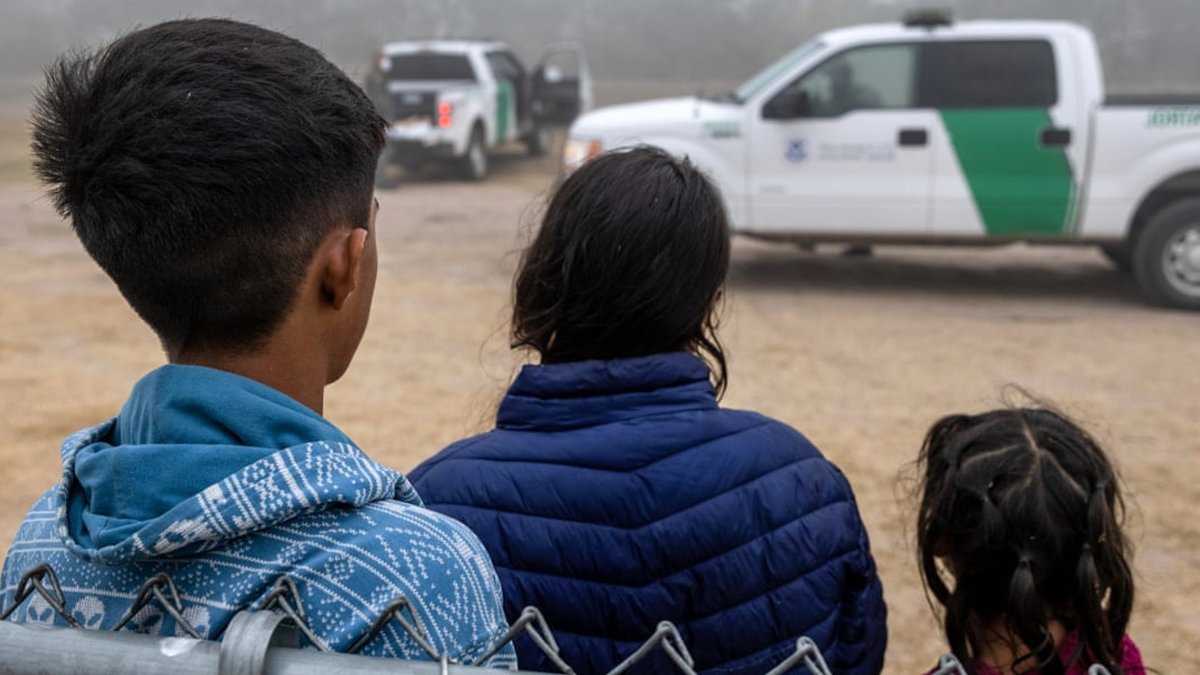
Attorneys are mobilizing across the country to free hundreds of children currently held in US immigration custody, where they have been stranded indefinitely without parents or guardians. This legal effort represents a counterstrike against federal actions critics say are riding roughshod over children’s rights while increasing deportations.
About 1,900 kids who arrived in the US unaccompanied by a parent or guardian were under federal control as of the end of August. From babies to teenagers, these children have spent an average of 183 days in shelters or long-term support care. This duration, roughly six months, occurs despite many having family members in the United States waiting for their release as legal cases move through the system.
More than 50 legal organizations, firms, and law offices have joined a mission called the Children’s Due Process Project. Lawyers working pro bono are heading to federal courts to argue case-by-case that these kids are being detained unlawfully. The immediate goal is to use highly effective habeas corpus petitions to force officials to justify keeping the children in custody or release them.
This aggressive move is necessary to fight a crisis of seemingly interminable stays in facilities affiliated with the Office of Refugee Resettlement (ORR). Simultaneously, the administration has defunded these kids’ existing attorneys and scheduled accelerated immigration hearings where government lawyers argue for abrupt removal from the US before children can receive legal protections from other agencies.
Related: Judge overturns New York climate polluter law
“This is the most immediate way to help the kids who are currently being harmed,” said Becky Wolozin, senior attorney at the California-based National Center for Youth Law. Her group co-manages the project, which started quietly this summer and has built up over recent months. Other managing organizations include the Acacia Center for Justice in Washington DC, The Door, a New York-based youth development organization, and the Immigration and Human Rights Clinic at Loyola University Chicago School of Law.
Attorneys are deploying petitions for a writ of habeas corpus for each child concerned. This legal procedure allows any person to argue in court that they are detained or confined without a valid reason. These petitions have rarely been used or needed for immigrant kids in the US who have a vetted, willing person to care for them, known as a sponsor, until now.
“That’s the race that we’re in, is can we help children get to their families before they get chewed up and spit out by the child detention system?” Wolozin said.
A spokesperson for the administration for children and families at the Department of Health and Human Services (HHS), the parent agency of ORR, responded to a request for comment. “The standards that ORR currently follows closely mirror those of the US support care system,” the statement said in part. “Once a sponsor completes their application, ORR releases children as quickly, or faster, than the US support system. ORR is not slow, we are just more careful, as we should be: children’s lives are at stake.”
Related: Barclays protesters avoid terror charges
US law says that unaccompanied immigrant children should be promptly placed in the least restrictive setting that is in the best interest of the child, typically with a family member. During Donald Trump’s second term, officials devised new restrictions that make it harder for children to go home to waiting sponsors. They also undid privacy protections for undocumented sponsors, allowing ORR to collaborate with immigration enforcement at the Department of Homeland Security (DHS).
“There’s just attempts from every single angle to harm the children that are in federal custody. And I think because they’re in federal custody, the government has more access to them,” said Beth Baltimore, interim managing director of the legal services center at The Door. She implied that when children are in ORR facilities, the administration is able to exert more control over their futures.
Experts describe ORR’s facilities as the equivalent of detention for children. “Children are not allowed to leave. They have no contact with people outside of the place where they live,” Wolozin said. “And so they eat, sleep, go to school, do activities all within one sort of small campus.” In some cases, the facility is a single building where the child’s whole life happens.
“Kids ‘are being held against their will’, explained Ryan Matlow, a clinical associate professor at the California-based Stanford Medicine at Stanford University.”
Related: Violence spreads in Kashmir region
Trusted adults at large, congregate shelters are hard to find for the children. Even well-meaning staffers “answer to ORR – and DHS by extension,” Wolozin said. She remembers kids telling her how the walls to their rooms wouldn’t reach the ceilings of some large shelters. “You’re essentially sleeping in a cubicle, and there was constant noise.”
Meanwhile, in Texas and Florida, the facilities are unlicensed. One former ORR shelter in Brownsville, Texas, now closed, was infamously housed in a repurposed Walmart Supercenter.
By the end of July, at least 65 kids with continuing immigration court proceedings had been held by ORR for over a year, according to data researchers at the New York-based immigration data insights platform bklg.org.
Attorneys are starting to see some fresh success with kids now. “Judges are basically asking, like, ‘What are you doing? This child should be with their family,’” Wolozin said.


